



Air Quality

There are several challenges related to indoor air quality, including:

cr1

Poor ventilation

Poorly ventilated buildings can lead to a buildup of indoor air pollutants, such as carbon dioxide, volatile organic compounds (VOCs), and particulate matter.

cr2

Poorly maintained HVAC systems

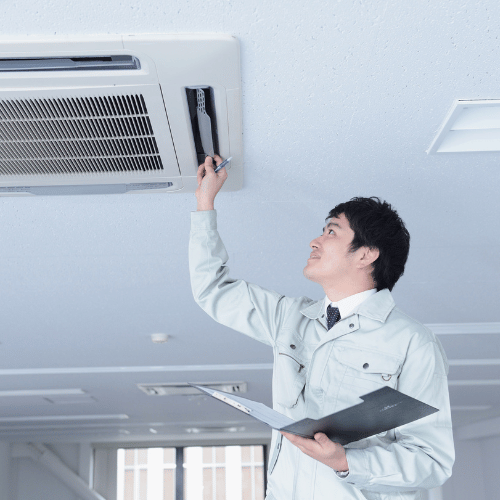
Heating, ventilation, and air conditioning (HVAC) systems that are not properly maintained can contribute to poor indoor air quality by circulating pollutants or not effectively removing them.

cr4

Environmental pollution

Outdoor air pollution can enter buildings through windows, doors, and other openings, leading to poor indoor air quality.

cr6

Use of certain products

The use of certain products, such as cleaning chemicals, paints, and air fresheners, can release pollutants into the air and contribute to poor indoor air quality.

conc1

Lack of awareness

Many people are not aware of the potential impact of indoor air quality on their health, and may not take steps to address it.

Technical Description

An air quality index (AQI) is a descriptive scale used to show how polluted the air is. There is little research on the health effects of air pollution in short time frames. This is why air quality indexes are typically only provided for time periods of an hour or longer. This method is effective when it comes to measuring outdoor air quality. But indoors is different, however – it is important to be notified as soon as possible when air quality deteriorates so that the users of the space can take direct and immediate action to remedy the situation. Concentrations of some air pollutants can be between 2 to 10 times higher indoors than outdoors.

To solve this issue, Spin Technologies uses a real-time Air Quality Index for Indoor (IAQI) applications that looks for five different important variables in real time: CO2, TVOC (Toval Volatile Organic Compound), Temperature, Humidty, and Barometric Pressure. By receiving this data, Sonar 2.0 executes an algorithm to calculate the IAQI in the last time interval.

Spin devices for Indoor Air Quality can be connected to an existing W-Fi (2.4 GHz) WLAN, a private LoRaWAN Network, or usin RF-9 (RF-900 MHz) technology.

An outdoor air quality monitoring IoT solution measures key variables to assess the quality of the air in outdoor environments. Sensor devices capture data on parameters such as particulate matter (PM2.5, PM10), nitrogen dioxide (NO2), ozone (O3), carbon monoxide (CO), sulfur dioxide (SO2), temperature, humidity, and potentially other relevant factors. The collected data is transmitted wirelessly to a cloud platform for processing and analysis. Users access real-time outdoor air quality information through user-friendly interfaces, enabling them to make informed decisions and take necessary actions to mitigate air pollution and protect public health.

contact@spintechnologies.net

Call us +1 305-728-7000

Solution provider of choice